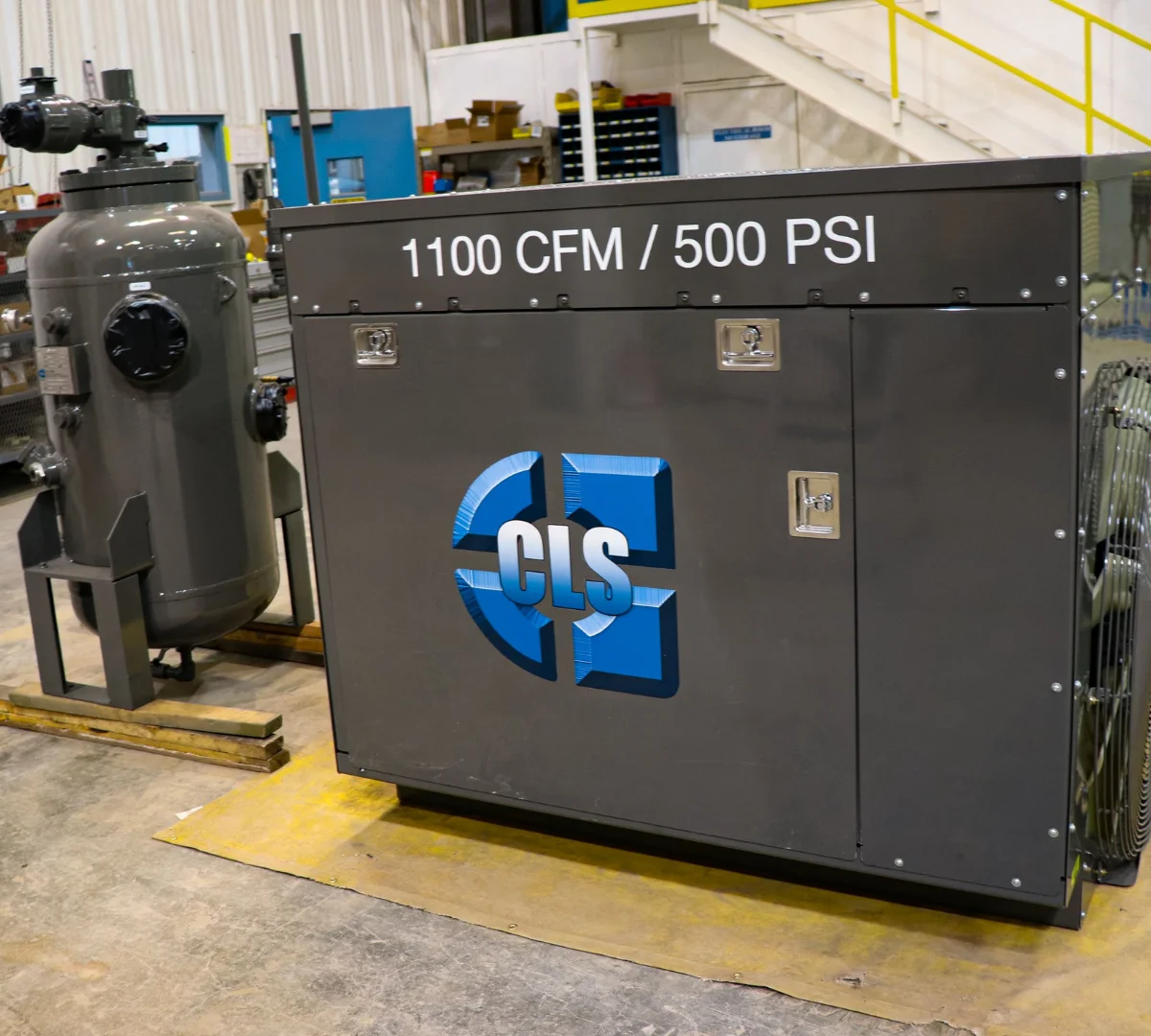
Understanding CFM vs. PSI: Why Both Matter in Your Air System
When it comes to compressed air, two measurements determine how well your equipment will perform: CFM and PSI. They show up on every compressor spec sheet, but many users aren’t sure what they actually mean or how they impact their compressed air system. Understanding both is key to choosing the right compressor and keeping your operation running efficiently.
What Is PSI?
PSI (pounds per square inch) measures the pressure of the air your compressor delivers. Think of PSI as the “force” the air is delivered with.
- Higher PSI = stronger, more forceful air.
- Lower PSI = less pressure and limited tool or equipment performance.
Many industrial tools require a minimum PSI to operate correctly. If your system can’t consistently deliver that pressure, you’ll experience slowdowns, poor performance, or equipment faults.
What Is CFM?
CFM (cubic feet per minute) measures the volume of air your compressor produces. CFM is the “amount” of air available at any given moment.
- Higher CFM = more air available to run multiple tools or high-demand equipment.
- Lower CFM = your system may struggle to keep up with demand.
If your facility uses high-air-volume tools, long hose runs, or multiple stations at once, CFM becomes a crucial sizing factor.
PSI vs. CFM: Why Both Matter
Many compressed air users mistakenly focus only on PSI, assuming “more pressure equals better.” In reality, PSI and CFM work together to determine whether your compressor can meet the needs of your application.
- PSI ensures your equipment gets the force it requires.
- CFM ensures you have enough air volume to maintain that force consistently.
A compressor may reach the correct PSI, but without enough CFM, it won’t sustain pressure under load. That’s when you see pressure drops, lagging tools, or excessive cycling.
Sizing Your System Correctly
Choosing a compressor involves balancing both values:
- Identify the highest PSI requirement of your tools.
- Determine the total CFM demand of all tools running simultaneously.
- Add a safety margin to ensure you’re not running your compressor at max output 24/7.
Proper sizing prevents downtime, protects your equipment, and reduces energy waste, saving you money over the life of the system.
Still Unsure What Your Operation Needs?
That’s where CLS comes in. Our team can evaluate your equipment, usage patterns, and future requirements to ensure your system delivers both the pressure and the volume your operation demands.
Reach out to schedule a compressor assessment or get guidance on selecting the right compressor for your facility or next project.
Categories